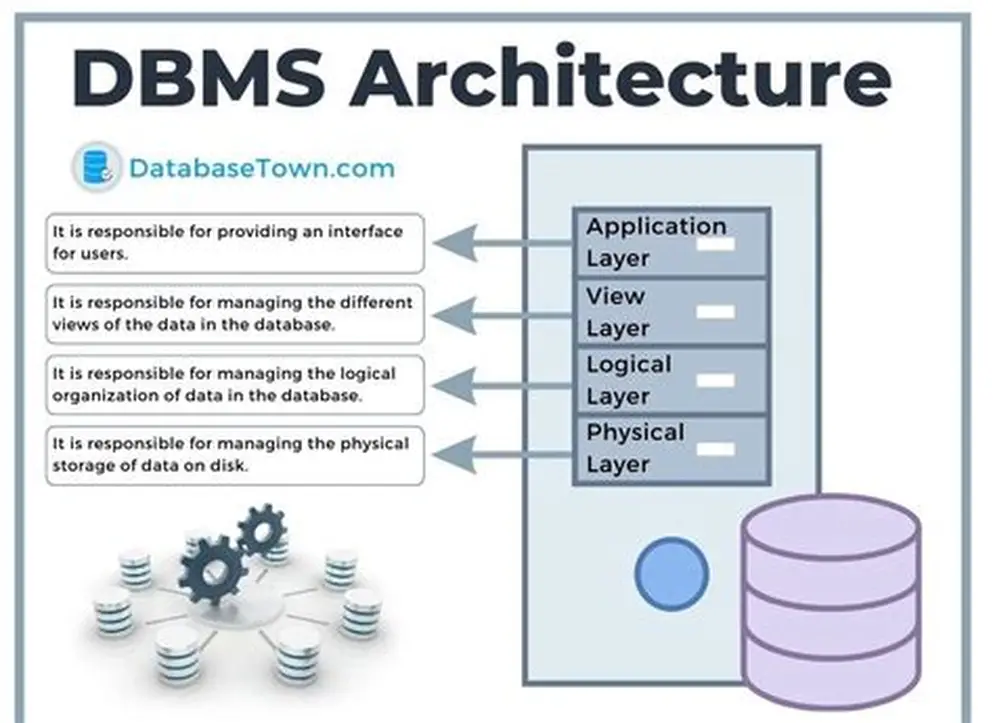
A Database Management System (DBMS) is software that allows users to create, store, organize, retrieve, and manage data in a structured way. It acts as an interface between the user and the database, ensuring that data is handled efficiently, securely, and consistently.
Key Points:
-
A DBMS enables users and applications to interact with databases without needing to understand the underlying complexities.
-
It stores data in an organized format, typically in tables (rows and columns).
-
It provides tools for data manipulation such as inserting, updating, deleting, and querying data.
Main Functions:
-
Data Storage, Retrieval, and Update – Efficiently stores data and allows quick access and modification.
-
Data Security – Protects data from unauthorized access.
-
Data Integrity – Ensures accuracy and consistency of data.
-
Data Sharing – Allows multiple users to access data simultaneously.
-
Backup and Recovery – Prevents data loss and restores data when needed.
Examples of DBMS:
-
MySQL
-
Oracle Database
-
Microsoft SQL Server
-
MongoDB
- Teacher: Admin User